







In this article, I will cover the Best Crypto Schema Markup Tools that help cryptocurrency websites improve their structured data implementation and technical SEO. Whether it’s crypto exchanges, blockchain startups, NFT marketplaces, or crypto news platforms, the right schema markup helps search engines to understand website information better. I’ll share the top tools, their key features, pros, cons, and pricing to help you choose the right solution for your website’s SEO needs.
How We Evaluated These Best Crypto Schema Markup Tools?
We evaluated these crypto schema markup tools based on their structured data capabilities, implementation options, validation features, usability, and suitability for cryptocurrency websites.
| Evaluation Criteria | What We Evaluated |
|---|---|
| Schema Type Support | Checked support for Organization, Article, Product, SoftwareApplication, BreadcrumbList, and other relevant schema types. |
| JSON-LD Capabilities | Evaluated JSON-LD generation, implementation, and customization options for structured data. |
| Automation Features | Examined automatic schema generation, updates, and structured data management across website pages. |
| Customization Options | Assessed custom schema creation, property mapping, and flexibility for different crypto website requirements. |
| Validation and Testing | Reviewed capabilities for identifying schema errors, warnings, missing properties, and markup issues. |
| CMS Compatibility | Checked integration with WordPress and other website platforms for easier schema implementation. |
| Ease of Use | Evaluated interface simplicity, configuration processes, accessibility, and suitability for different technical skill levels. |
| Pricing and Scalability | Considered free and paid availability, feature limitations, scalability, and suitability for small and enterprise crypto websites. |
Quick Comparison Table
| Tool Name | Main Purpose | Key Schema Capabilities | Pricing |
|---|---|---|---|
| Rank Math SEO | WordPress schema automation | Article, Product, Organization, Breadcrumb, and custom schema | Free & Paid |
| Yoast SEO | On-page SEO and structured data | Article, WebPage, Organization, Person, and BreadcrumbList | Free & Paid |
| Schema Pro | Automated schema implementation | Article, Product, Review, FAQ, and custom schema | Paid |
| Schema App | Enterprise structured data management | Advanced Schema.org markup, entity linking, and knowledge graphs | Custom Pricing |
| TechnicalSEO.com Schema Markup Generator | JSON-LD generation | Article, Product, Organization, Event, and other common schema types | Free |
| Google Rich Results Test | Google rich-result eligibility testing | Tests supported structured data and identifies markup errors | Free |
| Schema Markup Validator | Schema.org validation | Checks JSON-LD, Microdata, RDFa, and Schema.org vocabulary | Free |
| Screaming Frog SEO Spider | Technical SEO auditing | Crawls websites and identifies structured data implementation issues | Free & Paid |
| InLinks | Entity SEO and schema automation | Entity-based optimization and structured data generation | Free & Paid |
| WordLift | Semantic SEO and knowledge graphs | Entity recognition, structured data, and knowledge graph management | Paid |
1. Rank Math SEO
Rank Math SEO is a WordPress SEO suite, it has a dedicated Schema Builder to create structured data without manually writing code. It supports several Schema types and enables users to define a default category, create custom schemas, and add multiple schemas to one post. It creates JSON-LD markup and imports an existing schema from a URL, HTML source or pasted JSON-LD.
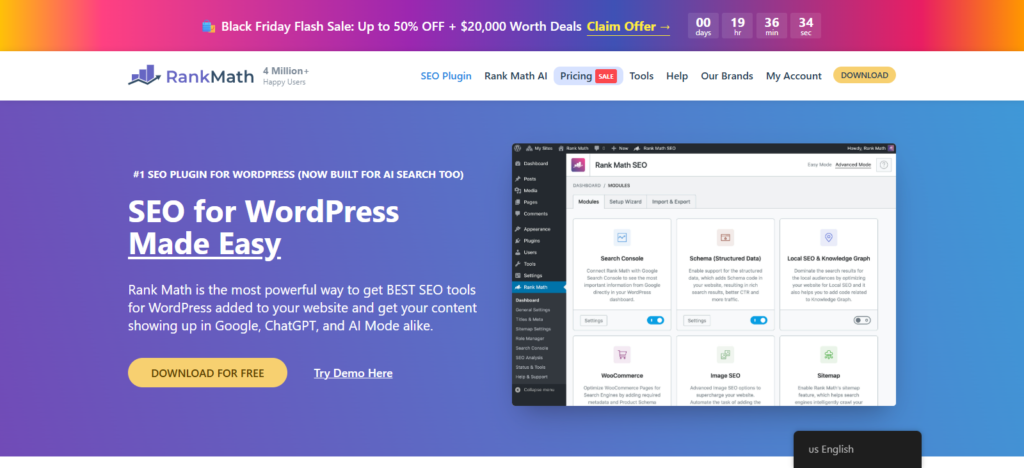
It works for articles, FAQs, reviews, breadcrumbs, and custom entity markup for crypto websites, but it may need to be customized for crypto-specific schema types. Automation is powerful with global schema templates, custom variables, and post type rules that can be rolled out across the entire site. Its Code Validation tab previews JSON-LD and links directly to Google’s Rich Results Test . Rank Math integrates natively with WordPress and works with popular page builders.
Main Features
- Automatically creates schema markup for WordPress sites.
- Supports schema types such as Article, Product, Organization and Breadcrumbs.
- Comes with its schema builder for custom schema creation.
- Supports implementation of structured data: JSON-LD.
- Provides schema validation options to trap markup problems.
Advantages
- Makes schema implementation simpler for WordPress users.
- Provides different schema types for different crypto content.
- Reduced structured data to configure manually.
- Offers free features and advanced paid functionality.
Limitations
- Specifically for WordPress sites.
- Paid plans are needed for advanced schema features.
- Custom schema setup may require technical knowledge.
- The wrong content configuration can cause incorrect markup.
2. Yoast SEO plugin
Yoast SEO is a popular WordPress SEO plugin that automatically adds structured data to every page in JSON-LD, the format search engines recommend. Its schema graph can include Website, WebPage, Organization or Person, Article, FAQ, and breadcrumb data, aiding search engines in understanding content relationships.

It allows schema customization through settings, blocks and developer filters, which makes it ideal for crypto websites that need Article, FAQ, Organization, Person and breadcrumb markup.
Automation is a key strength, as Yoast creates a base schema graph for the entire site without any manual implementation. Validation is performed externally via Google’s Rich Results Test or Schema.org tools. Yoast is focused on clean, connected JSON-LD. It integrates deeply into WordPress and has Premium features that add extra trust and E-E-A-T related schema.
Main Features
- Creates structured data for pages on the site automatically.
- Supports Article, WebPage, Organization and Person schema types.
- Generates structured data connected through its schema graph.
- Integrate schema markup with WordPress Content
- Includes controls for website and author information.
Pros
- WordPress publishers will find it easy to use.
- Automates the implementation of key structured data.
- Links related website entities through schema graphs.
- Helps with SEO optimization by using structured data.
Constraints
- Limited ability to handle complex custom schemas.
- Certain advanced features need paid add-ons.
- Not meant for cryptocurrency sites.
- Needs more tools to fully validate schema
3. Schema Pro
Schema Pro is a WordPress schema plugin that helps you automatically add structured-data to large sites. It supports common schema types like Article, FAQ, Product, Review, Recipe, Local Business and more with display rules to add markup to selected pages, posts, categories or custom post types. It outputs JSON-LD and has field mapping so you can auto populate schema from WordPress fields.
Great for crypto sites – articles, FAQs, reviews, organization info, custom post types, etc. Custom schema work may be needed for niche crypto entities. This is especially useful as its automation allows you to use one schema configuration on many pages. Schema Pro has built-in field validation that flags missing required fields and links you to Google testing tools. It is compatible with WordPress and works with Advanced Custom Fields.
Main Features
- Automates the adding of structured data on website pages.
- Supports Article, Product, Review, Organization and other schema types.
- Custom field mapping for schema properties is supported.
- Allows to assign schema to post types and categories.
- JSON-LD structured data was implemented.
Pros
- Reduced manual repetitive schema configuration.
- Provides flexibility to automate schema.
- Manages a broad spectrum of content types and site sections.
- Allows for structured data consistency across pages.
Limitations:
- It primarily targets WordPress sites.
- High level customization may require technical understanding.
- Complex schema requirements may require manual adjustments.
- Is not a replacement for standalone tools that validate schemas.
4. Schema App
Schema App is an enterprise structured data platform that enables organizations to create, manage and deploy schema markup across complex websites. It supports a broad range of Schema.org entities, and keeps a consistent machine-readable source of truth using a Schema Markup Graph Database . It generates JSON-LD and provides real-time validation as the user creates the markup, showing errors and warnings as the user edits.
It is especially helpful when crypto websites with large content libraries, product or service pages, educational resources, and entity-based knowledge-graph strategies. Robustly customizable with its Schema App Editor, Highlighter and custom field mapping.
Automation capabilities include CMS plugins that generate default markup for articles, blogs, authors, search pages and collections. It integrates with WordPress, Shopify, Drupal, Adobe Experience Manager and can be deployed on almost any site.
Major Features
- Enterprise level structured data management is provided.
- Supports a rich schema.org vocabulary and schema types.
- Entity linking and knowledge graph functionality
- Offers features for deploying and managing structured data.
- Supports schema monitoring and optimization processes
Benefits
- Great for large, complex websites.
- Enables advanced entity-based structured data strategies.
- Aids in managing schema across multiple pages of a website.
- Offers scalable structured data management capabilities.
Restrictions
- It might be costly for smaller crypto companies.
- Implementation skills for advanced features.
- It can be a little tricky to set up for a beginner.
- Enterprise features might be too much for simple websites.
5. SEO.com Schema Markup Generator
TechnicalSEO.com Schema Markup Generator This free schema markup generator is a web based tool to quickly generate Schema.org structured data. It supports most common schema types and produces the JSON-LD markup with required and optional item properties. Users can copy the generated code into a website, or test it directly through Google’s Structured Data Testing Tool or Rich Results Test .
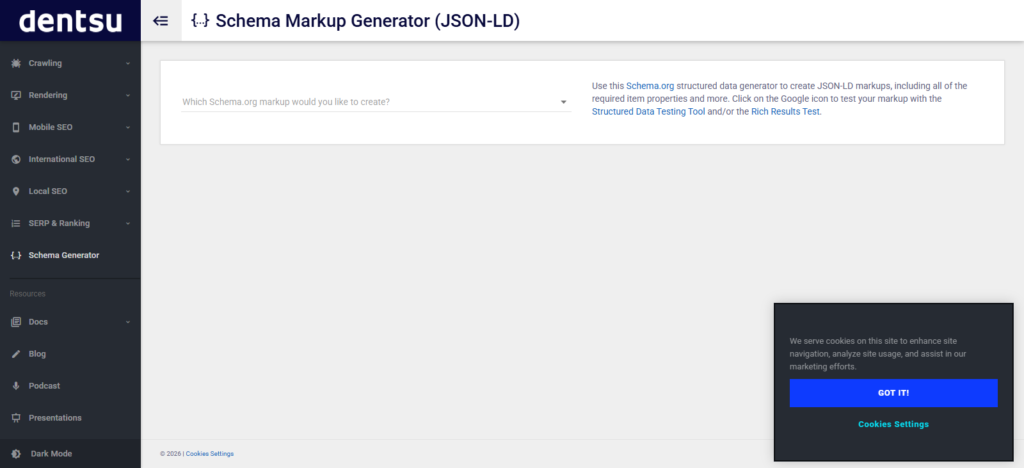
It is useful for creating one-off FAQ, Article, Organization, Breadcrumb, Product, Review or HowTo schema for crypto websites but less useful for automated site-wide deployment. You can edit generated fields to customize, but it doesn’t have the deep rule-based automation of a CMS plugin.
Validation is simple because the tool links directly to Google testing tools. There’s also no native CMS integration. Instead, users need to copy and paste the generated JSON-LD into their website, theme, plugin or tag manager.
Features
- Creates JSON-LD structured data for supported schema types.
- Supports Article, Product, Organization and other common formats.
- Provides fields to input structured data properties.
- Generates copy-pastable markup for web pages.
- Makes manual schema code generation easier.
Advantages
- Schema creation that’s free and easy to use.
- Cuts down on the need to hand-write JSON-LD.
- Works well for single pages and small sites.
- Supports common structured data implementation needs.
Limitations
- Has to be manually implemented on site
- No full website automation.
- Separate validation is needed for generated markup.
- Advanced custom schema may require coding knowledge.
6. Google Rich Result Test
The Google Rich Results Test is Google’s official tool to verify structured data eligibility for rich results. It can test a live URL or code that is pasted . It focuses on the schema types that are recognized by Google for enhanced search features such as FAQ, Product, Review, Article, Breadcrumb, Video and HowTo. It reads JSON-LD and other supported structured-data formats (JSON-LD is the preferred implementation method).
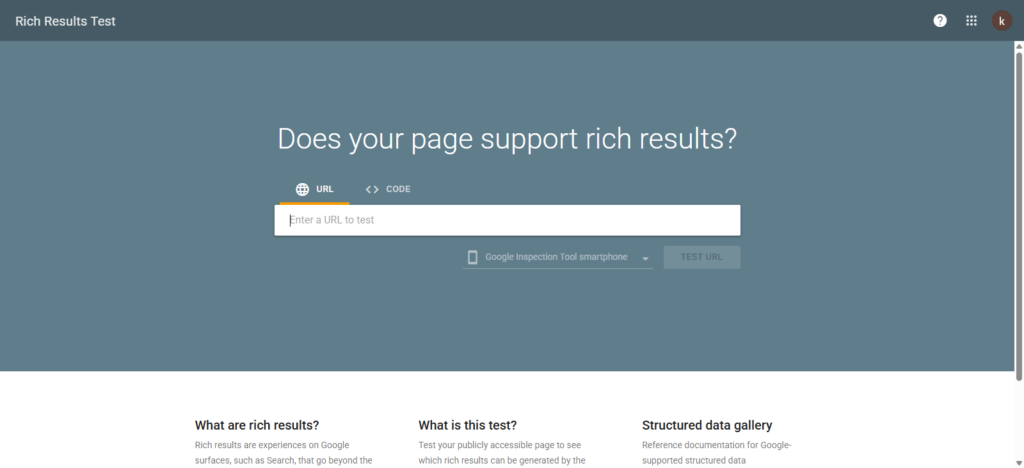
It is helpful for validating FAQ, Article, Organization, and breadcrumb markup for crypto websites, but only reports eligibility for Google-supported rich-result features. It’s diagnostic, not schema generation or CMS automation. Users can review detected items, warnings and errors, then correct markup before deployment. It works with any website indirectly because it tests public URLs or copied code so it is a must for quality assurance.
Main Features
- Recognizes the types of rich-results supported on web pages.
- Structured data testing tool for Google rich results eligibility.
- Identifies structured data errors and alerts.
- Supports testing via URL or code snippet.
- Gives details of any markup and implementation problems found.
Benefits
- Structured data testing tool (gratis)
- Helps you spot eligibility issues with rich results.
- Lets you try out changes to your website before going live.
- Provides info on structured data testing specific to Google.
Constraints
- It does not create schema markup.
- Tests only structured data types that Google supports rich results for.
- No guaranty of rich result display in search.
- Not a replacement for full Schema.org validation.
7. Schema Markup Validator
validator.schema.org is the official Schema.org tool that validates that your structured data is technically correct. This differs from Google’s Rich Results Test in that it validates markup against the full Schema.org vocabulary, not just the Google rich-result requirements. It supports JSON-LD, Microdata and RDFa and can detect syntax errors, unknown properties and structural problems.
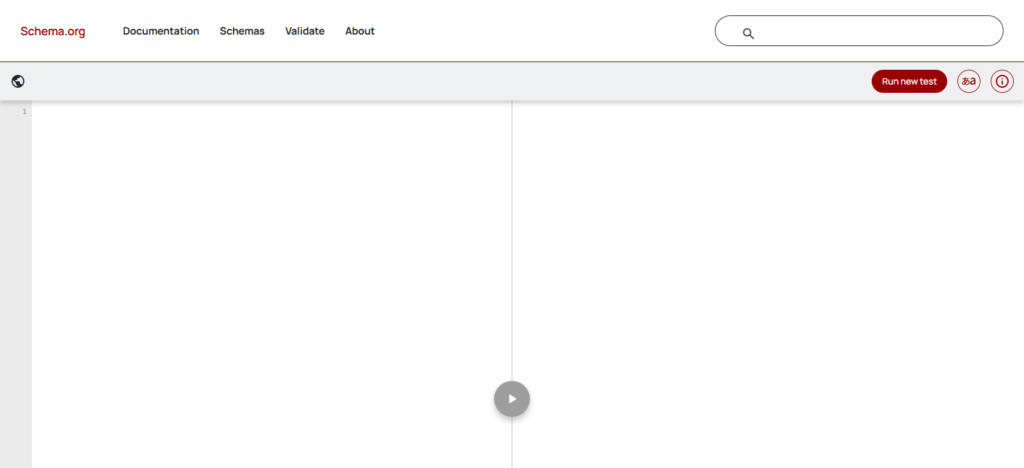
It’s helpful for validating custom or niche schemas for crypto websites that Google may not already show as a rich result, such as organization, product, educational, and entity-focused markup.
It doesn’t generate schema or automate deployment, but is excellent for detailed debugging and standards compliance. You can paste in JSON-LD code or test a live page and then see any errors or warnings. It will work with any CMS or custom built website as validation is external and platform independent.
Features
- Validates structured data against the Schema.org vocabulary.
- Supports JSON-LD, Microdata and RDFa formats.
- Identifies markup errors and structural problems.
- Shows detected entities and their properties.
- Assists you in validating via website URLs or code snippets.
Pros
- Structured data validation for free.
- supports several markup formats.
- Helps to find incorrect schema properties.
- Useful for checking custom crypto schema implementations
Limitations
- It does not auto generate schema markup.
- Does not offer full website-wide schema automation.
- It expects the user to understand the validation results.
- Doesn’t affect your eligibility for Google rich results.
8. Screaming Frog SEO Spider Tool
Screaming Frog SEO Spider is a technical SEO crawler that audits websites at scale, including structured-data implementation. It can scrape JSON-LD, Microdata and RDFa from every crawled page and validate markup against Schema.org and Google rich-result requirements. This makes it especially useful for crypto sites with lots of pages like coin profiles, market data, guides, news articles, and FAQ sections.
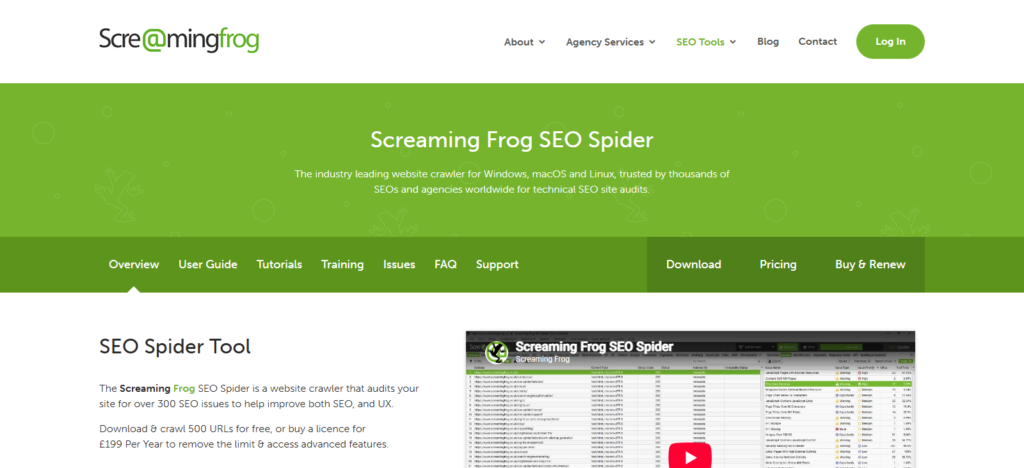
It audits existing schema and doesn’t create schema, but users can find missing, duplicate or invalid markup across a domain. Customization is limited to crawl configuration, filters and export settings, not schema editing. Automation is good for site-wide audits, scheduled crawls and bulk reports. It works with any CMS, as it crawls the rendered website and its structured-data validation capabilities are a paid license.
Main Features
- Crawls website pages for technical SEO analysis.
- Parses the structured data from the crawled pages.
- Detects errors and warnings in schema validation.
- Large scale website crawling and auditing support.
- Crawl data can be exported for further analysis.
Pros
- Ideal for auditing large crypto websites.
- Identifies structured data problems across a number of pages.
- Allows complete technical SEO analysis.
- Detailed crawl reports and export options are available.
Constraints
- Requires installation of desktop software.
- Advanced crawling features require paid license.
- Can be a bit hard to get setup for beginners.
- Doesn’t automatically generate full custom schema markup.
9. Inbound Links
InLinks is an SEO and content optimization platform with a schema markup tool for entity-focused SEO. It automatically translates page information into structured markup in JSON-LD and generates valid schema with all the properties. Supports common schema needs like Article, FAQ, Organization, Person and entity related markup. Useful for crypto websites that want to strengthen topical relevance and entity understanding.

Its content and entity workflow allows you to customize so you can map your schema to the topics and entities found on a page. One of the biggest advantages is the automation. InLinks can create the markup from the content of the page instead of having to enter each field manually. You can test the validation with the Google Rich Results Test or the Schema Markup Validator. It integrates to sites through generated code and is especially useful for content led SEO strategies.
Features
- Entity Based SEO understanding of the website’s topic.
- Internal linking should be automated, it recommends.
- Offers features for structured data and entity optimization.
- Helps to identify important entities in website content.
- Helps with semantic analysis of website pages.
Advantages
- Supports entity-based SEO strategies.
- Helps to improve context relationships between website pages.
- Decreases manual internal linking.
- Perfect for content-heavy cryptocurrency sites.
Restrictions
- Not just schema markup.
- Some advanced features require a paid subscription.
- Automated recommendation editorial review.
- Extra tools may be needed for complex schema implementations.
10. WordLift
WordLift is an AI-powered SEO platform that extracts a knowledge graph from your website’s content and publishes it as schema markup. It supports entity-based structured data, which helps search engines and artificial intelligence systems understand how people, organizations, products, topics, and articles are connected. It produces JSON-LD and is especially helpful for crypto websites with a lot of educational content, glossaries, token pages, company profiles, and news coverage.
Customization is powerful, it allows users to define and relate entities, taxonomy terms and content. Automation is a huge benefit: WordLift analyzes content, identifies entities and generates structured data at scale. Validation is typically done using external tools like Google’s Rich Results Test or the Schema.org validator. It also integrates with WordPress and can power enterprise knowledge graph implementations making it a fit for publishers and crypto brands looking for deeper semantic SEO. Schema Markup Generators: The Best Options in 2024 | Search Engine Watch
Key Features
- Uses AI to recognize entities.
- Generates structured data for content of websites.
- assists in building and maintaining knowledge graphs.
- Connects related entities on website pages.
- Mixes semantic SEO features with content management workflows.
Benefits
- Makes entity-based structured data easier to implement.
- Provides semantic SEO for crypto publishers.
- It helps in organizing content by using knowledge graphs.
- Eliminates manual schema creation and management.
Limitations
- Accurate content and entity information is needed
- Paid features can be pricey for small websites.
- Knowledge graph configuration can be complex.
- May need further validation for custom schema requirements.
How to Choose the Best Crypto Schema Markup Tool?
Supported Schema Types: Select a tool that supports schema types like Organization, Article, Product, SoftwareApplication and BreadcrumbList to properly structure different pages of the cryptocurrency website.
Check JSON-LD Support Choose a tool that can generate and implement JSON-LD, making it easy to add structured data without having to write complicated markup for every page on your website.
Search for Automation Features: Focus on solutions that automatically create and update schema markup on different pages, minimizing repetitive tasks and ensuring consistent structured data across your cryptocurrency website.
Look for Customization Options: Opt for a solution that provides custom properties, field mapping, and schema configuration to address the unique needs of crypto exchanges, blockchain platforms, and NFT marketplaces.
Validate Schema Markup: Choose tools that can detect structured data errors, warnings, and missing properties to make sure that your cryptocurrency website’s schema markup complies with the required technical specifications.
Ensure CMS Compatibility: Check whether the tool is compatible with your current content management system (CMS), especially WordPress, and allows for easy implementation on blogs, landing pages, and business websites.
Compare Pricing and Scalability: Examine the free and paid plans, usage restrictions, and advanced features to select a tool that is compatible with your budget and can accommodate your website’s future expansion.
Look for Ease of Use: Select a tool with a straightforward interface, understandable documentation, and easy-to-manage configuration options so your SEO team can easily generate, implement, and sustain structured data.
Conclusion
It’s important to choose the right crypto schema markup tool to improve structured data management and support cryptocurrency website SEO. Tools like Rank Math SEO, Yoast SEO, Schema Pro, Schema App and WordLift provide different features for schema generation, automation and entity management. Meanwhile, the Google Rich Results Test and Schema Markup Validator help to identify structural data errors and validation issues.
Check for JSON-LD support, schema types, customization, CMS compatibility, pricing and scalability before choosing a tool. The right solution is based on your website needs, technical expertise and SEO goals. With the proper schema implementation, search engines can also understand your content better.
FAQ
What Are Crypto Schema Markup Tools?
Crypto schema markup tools help cryptocurrency websites create, implement, and validate structured data using Schema.org vocabulary and formats such as JSON-LD.
Which Are the Best Crypto Schema Markup Tools in 2026?
Some popular options include Rank Math SEO, Yoast SEO, Schema Pro, Schema App, TechnicalSEO.com Schema Markup Generator, and WordLift.
Why Is Schema Markup Important for Crypto Websites?
Schema markup helps search engines understand cryptocurrency-related content, website information, products, organizations, and articles through structured data.
Which Schema Types Are Useful for Cryptocurrency Websites?
Commonly relevant types include Organization, Article, NewsArticle, Product, SoftwareApplication, BreadcrumbList, Person, and WebPage.
Is JSON-LD Suitable for Cryptocurrency Schema Markup?
Yes. JSON-LD is a practical format for implementing structured data because it separates schema information from visible website HTML content.