


The choice of the right digital marketing agency can be a game-changer in how an enterprise attracts customers, builds brand awareness, and competes in a crowded market. But big businesses need more than basic advertising services.
They need strategic planning, advanced analytics, scalable campaigns and measurable results. In this guide, I’ll share the Top Enterprise Digital Marketing Agencies, their key services, strengths, and limitations, and what businesses should consider before choosing a partner that matches their marketing goals and long-term growth plans.
How We Evaluated These Digital Marketing Agencies?
| Evaluation Area | What We Assessed | Strong Agency Indicator | Weak Agency Indicator |
|---|---|---|---|
| Enterprise Fit | Experience with large, complex organizations, multi-stakeholder teams, regulated sectors, and enterprise budgets. | Named enterprise clients and comparable program scale | Experience limited mainly to small businesses or single-channel projects. |
| Proven Results | Case studies, measurable outcomes, client names, timeframes, and the agency’s actual role in results. | Specific metrics such as revenue, ROAS, CAC, pipeline, conversion, or traffic growth. | Vague claims, logo-only proof, or no measurable baseline. |
| Strategic Capability | Quality of discovery, audience insight, competitive analysis, channel planning, and alignment with business goals. | A tailored strategy connected to revenue, pipeline, or market-share objectives | Generic playbooks or tactics proposed before understanding the business. |
| Service Breadth | Ability to deliver the required mix of SEO, paid media, content, social, commerce, analytics, and creative. | Integrated services under one strategy and accountable team. | Narrow capability when the client needs cross-channel execution. |
| AI and Automation | Use of AI for research, personalization, media optimization, forecasting, content operations, and reporting. | Practical AI workflows that improve speed, targeting, and decision-making. | AI mentioned as a buzzword without operational use cases. |
| Measurement and Reporting | KPI alignment, dashboard quality, metric definitions, attribution, and actionable recommendations. | Reporting tied to revenue, qualified leads, CAC, and ROAS, with clear next steps | Vanity metrics, delayed reporting, or unclear metric ownership. |
| Pricing Transparency | Fee structure, media spend treatment, deliverables, change orders, contract terms, and asset ownership. | Line-item pricing and clear scope matched to deliverables. | Bundled pricing, unclear inclusions, or hidden media-management fees. |
| Team and Delivery Model | Named account team, specialist seniority, communication cadence, onboarding plan, and escalation process. | Named strategists and specialists with a documented first-quarter plan. | Unclear staffing, high turnover risk, or no onboarding milestones. |
| Technology and Integrations | Analytics platforms, CRM and marketing-automation integrations, data governance, and reporting infrastructure. | Secure integrations with CRM, analytics, ad platforms, and enterprise data systems. | Manual reporting or limited ability to connect enterprise systems. |
| Global Reach and Scalability | Ability to support multiple markets, languages, brands, business units, and growing budgets. | Established processes for localization, governance, and multi-market scaling. | Limited capacity to expand beyond a single market or channel. |
| Client Feedback | References, reviews, retention signals, responsiveness, and client satisfaction with communication and results. | Consistent feedback on proactive advice, delivery, and measurable outcomes | Poor communication, slow delivery, or unresolved performance concerns. |
Quick Comparison Table
| Agency | Primary Strength | Best For | Core Services | Typical Fit |
|---|---|---|---|---|
| Wpromote | Performance media and attribution | DTC, B2B, and venture-backed brands scaling paid growth | Paid media, SEO, analytics, creative, attribution | Large brands needing cross-channel performance. wpromote+1 |
| Tinuiti | Commerce and retail media | Enterprise retail, DTC, and Amazon-led brands | Amazon, retail media, paid search, social, CRO, email/SMS | High-budget commerce brands. tweelabs+1 |
| Seer Interactive | SEO, analytics, and AI search | Enterprises needing data-led organic growth | SEO, GEO/AI search, paid media, analytics, CRO | Complex websites and data-driven teams. |
| NP Digital | Global SEO and content | Enterprise and mid-market challenger brands | SEO, content, paid/organic search, social, CRO | Global organic and content-led growth. ecomposer+1 |
| WebFX | Technology-enabled growth | Mid-market and enterprise companies | SEO, PPC, content, email, social, web design | Companies wanting integrated services. ecomposer+1 |
| iPullRank | Technical SEO and AI search | Large, complex, or enterprise websites | Technical SEO, AI search, content strategy, engineering support | Sites with technical and search complexity. |
| Monks | AI-enabled global marketing | Global enterprises transforming digital experience | AI, creative, media, commerce, customer experience | Large global brands needing integrated transformation. |
| Bounteous | Digital experience and strategy | Enterprise brands modernizing customer journeys | Strategy, analytics, marketing, digital experience, technology | Brands needing marketing plus technology alignment. |
| Ironpaper | B2B demand generation | B2B and SaaS enterprises | Inbound marketing, content, demand generation, sales alignment | B2B teams focused on qualified pipeline. |
| Brainlabs | AI-driven media buying | Global paid-media programs | Programmatic, paid search, paid social, data and measurement | Enterprises with large media budgets. |
1. Wpromote
Wpromote is a full-funnel digital marketing agency for enterprise and mid-market brands that combines media, creative, data and strategy. It works with large consumer and B2B brands, including publicly named clients like Intuit QuickBooks, Peacock, Spanx, TransUnion and Vuori. Its strategy ties paid, owned, and earned channels to revenue outcomes, test structures, and media mix decisions.
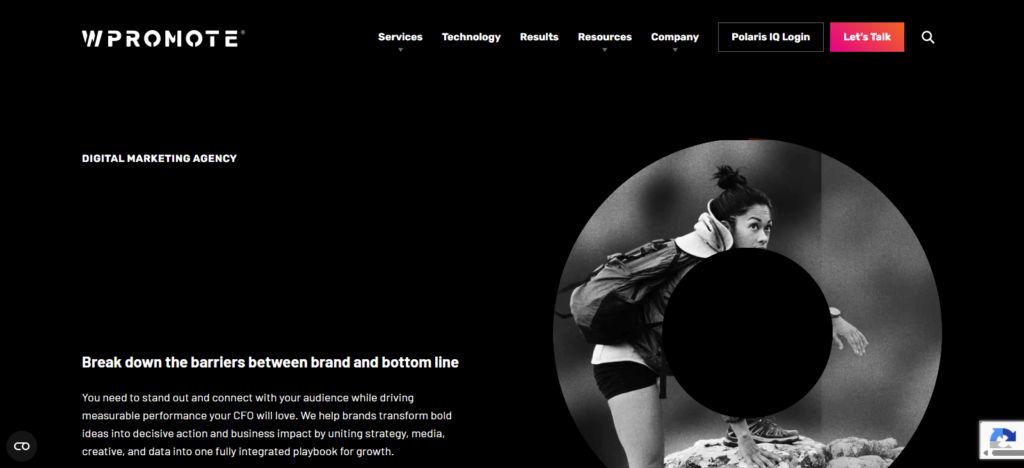
At the heart of Polaris IQ are AI and automation, used for forecasting, monitoring campaigns, analyzing creative, spotting anomalies and media-mix modeling. Engagements are usually custom retainers for brands with big media budgets. The agency works with clients across key markets and scales programs through integrated teams and shared data infrastructure.
Procedure
- Examine business goals and audiences.
- Create an integrated digital marketing strategy.
- Plan SEO, paid media and content campaigns.
- Run campaigns on the appropriate channels.
- Measure results and optimize performance.
Pros
- Integrated services of digital marketing
- A strong focus on performance marketing
- Data-driven campaign optimization
- Support for enterprise growth goals
Drawbacks
- Can be costly for smaller businesses
- Broad service scope may require coordination
- Results dependent on campaign execution
- Custom proposals make it difficult to compare prices
2. Tinuiti
Tinuiti is a leading performance marketing agency that drives growth in commerce, retail media & marketplaces. Particularly relevant for enterprise B2C, DTC and e-commerce brands requiring coordinated activity across Amazon, retail media networks, paid search, paid social, streaming, CRO, email, SMS, affiliate, influencer and measurement.
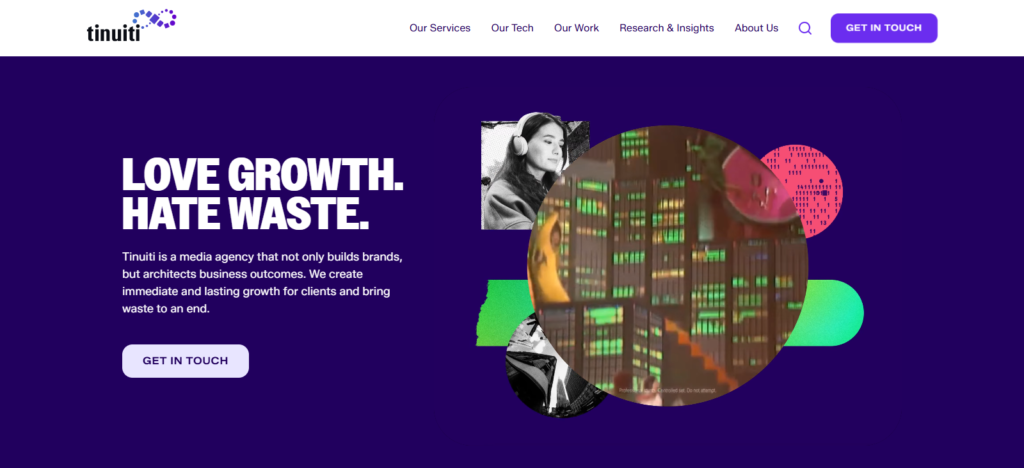
Marketing strategy is focused on full-funnel performance, audience data, experimentation and linking campaigns to sales and profitability instead of top-of-funnel engagement metrics. Tinuiti uses AI for audience planning, media optimization, creative testing and measurement to drive efficiency at scale.
Its engagement model is usually bespoke, retainer-based and suited to brands with large media spend. It has strong marketplace and retail-media capabilities and can support brands selling across major U.S. and international commerce channels.
Procedure
- Assess business objectives and customer segments
- Analyze advertising channels and actual results.
Develop paid and retail media strategies. - Run campaigns on the appropriate platforms.
- Analyze results and optimize advertising spend.
Advantages
- Demonstrated e-commerce marketing experience
- Retail media campaign capabilities
- Management of cross-channel advertising
- Optimizing performance
Cons:
- Small business too big for
- Enterprise campaigns get costly
- services focused on retail may not be relevant for all sectors
- Managing multi-channel campaigns can be complex
3. Seer Interactive
Seer Interactive is a data-led digital marketing agency specializing in SEO, analytics, paid media and AI-Enable search. It’s a great fit for enterprise organizations that have complex websites, many stakeholders and want to connect search visibility to business performance. Strategy starts with research, audience insight, technical analysis and measurement and translates findings into SEO, content, paid media and conversion optimization programs.
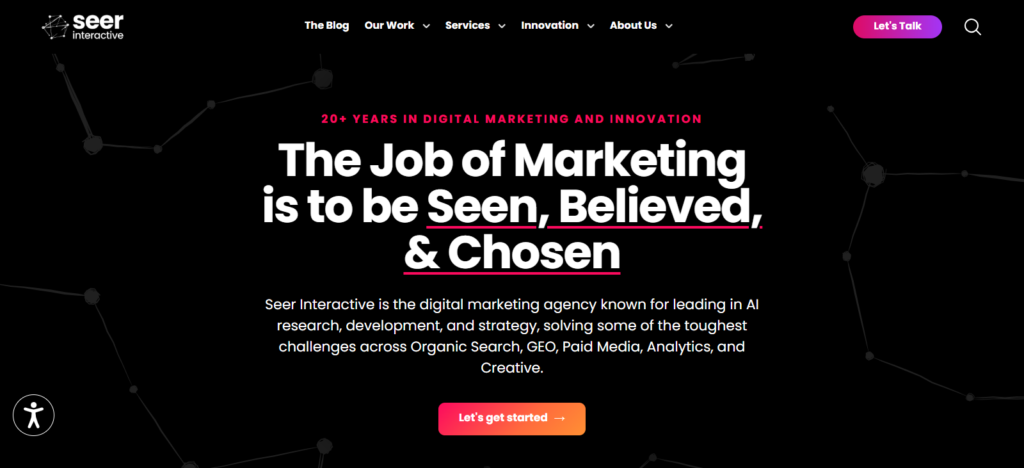
Seer uses AI and automation to search research, report, forecast and surface opportunities across large datasets. Pricing is usually custom depending on scope, channels, site complexity and analytics support needed. The agency’s core is working with North American and international enterprise clients to support scalable organic-growth programs with clear reporting and cross-functional collaboration.
Procedure
- Analyze search visibility and website performance.
- Research keywords, audiences and competitors.
- Build SEO and paid media strategies.
- Carry out technical and content recommendations.
- Analyze data and improve campaigns.
Benefits
- Robust SEO and analytics capabilities
- Data driven marketing strategy
- Experience with technical SEO
- Integrated organic and paid search capabilities
Cons
- Dev support may be needed for technical projects
- Organic search improvements take time
- Internal resources may be required for advanced analytics
-Consulting engagements are expensive
4. NP Digital
NP Digital is an enterprise performance and SEO agency that is part of Neil Patel’s global network and provides SEO, content, paid media, social, creative, and conversion optimization. It serves mid-market and enterprise brands with growing demand from healthcare, fintech, consumer technology and purpose-led retail. It combines organic search, content strategy, paid media, and multi-touch attribution into a single growth framework for marketing.
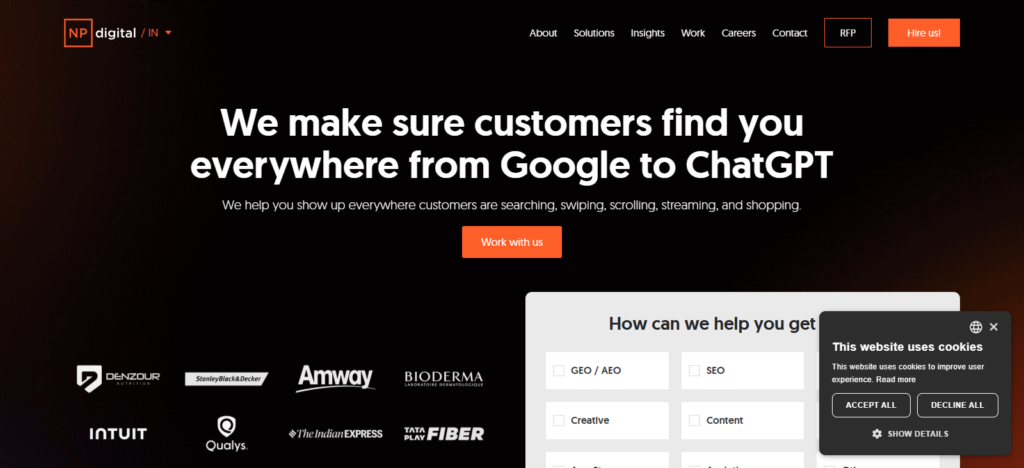
Artificial intelligence and automation are deployed for predictive targeting, content creation, media optimization and reporting. Engagements typically involve multi-service retainers and the firm says average deal sizes are growing as clients consolidate SEO, paid, content and creative work. NP Digital has a global footprint and can manage multi-market SEO, localization, and scalable content operations for international brands.
Procedure
- Analyze the business objectives and audience needs.
- Research SEO, content and paid media
- Create a tailored marketing strategy.
- Running campaigns on chosen channels.
Measure results and enhance performance.
Benefits
- Full-service Digital Marketing
- Content marketing and SEO expertise
- Managing paid media campaigns
- Data-driven performance improvement
Cons
- Wide service offerings require clear priorities
- Enterprise campaigns can be costly
SEO results don’t happen overnight - Multiple channels require coordinated management
5. WebFX
WebFX is a full-service digital marketing agency providing SEO, PPC, content marketing, social advertising, email, web design, and revenue-driven growth services. It serves both mid-market and enterprise companies and has particular capabilities in technology-enabled marketing and enterprise AI Search/GEO programs.
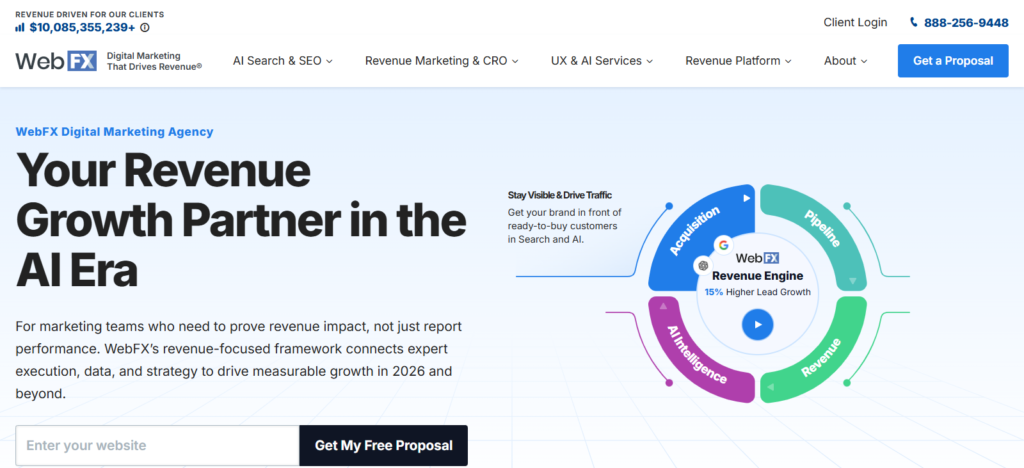
Its strategy is founded on measurable revenue, lead generation and constant optimization across search, paid and owned channels. WebFX uses AI to analyze performance trends across campaigns and industries, surfacing opportunities that could be missed by manually reviewing.
The GEO offering from the enterprise includes AI visibility audits, strategy, content optimization, structured data, entity optimization, authority building, citation monitoring and competitive benchmarking. Public guidance indicates services start around $3,000 a month, but enterprise scopes are custom. Its platform-driven model allows scalable reporting and multi-channel execution.
Process
- Evaluate marketing objectives and current performance.
- Perform SEO, PPC and competitor research.
- Develop a custom marketing plan.
- Execute campaigns and website enhancements.
- Track results and improve performance.
Advantages
- Various digital marketing services
- Solid SEO/PPC skills
Analytics and reporting support - Solutions for different business scale
Drawbacks
- Costs may rise for advanced services
- It is hard to select when there are too many options
- Results depend on the scope and execution of the campaign
- Complex projects may require time to onboard
6. iPullRank
We are iPullRank, a specialized AI Search, SEO and content-marketing agency, renowned for Relevance Engineering, GEO, audience-focused SEO, technical SEO and content strategy. It is for enterprise organizations, for high budget brands, for regulated industries, for companies with multiple business units, for distributed teams, for technical debt and executive stakeholders.
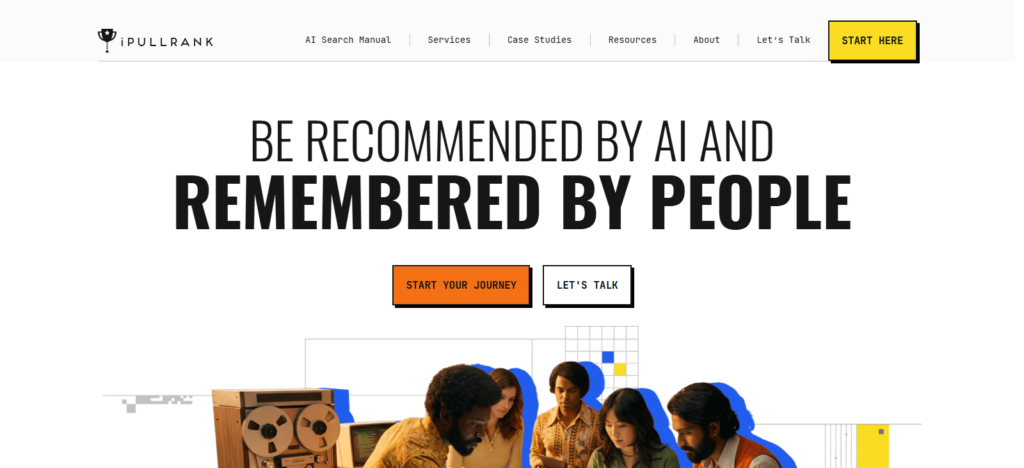
Its strategy links AI search visibility to revenue by improving entity understanding, content relevance, technical accessibility, and measurement across AI-enabled search experiences. Its service model is centered on AI and automation, especially generative-engine optimization, content workflows and search intelligence.
Pricing is usually on a retainer or custom basis, with a “Elite” option for big organizations that operate at scale. The agency’s specialized model makes it scalable for complex technical and multi-stakeholder search programs.
Process
- Review technical SEO and site infrastructure.
- Explore content opportunities and search intent.
- Create an enterprise search strategy.
- Improve content and technical aspects.
- Tune recommendations based on search results performance analysis.
Benefits
- SEO knowledge for niche businesses
- Technical SEO & site migration experience
- Strong content strategy skill set
- Concentrate on search visibility and organic growth
Pros
- Specialized services might be over basic SEO needs
- Technical changes might require input from a developer
- Consulting projects are expensive
- Organic improvements usually take time
7. Monks
Monks is a global digital and AI-enabled marketing agency that serves large enterprises looking for creative, media, commerce, customer experience and technology transformation in one ecosystem. It brings enterprise experience working with global brands with complex customer journeys, multiple markets and large content and media requirements.
It’s marketing approach includes brand building, performance media, commerce activation and data-driven experience design across paid, owned, and earned channels. Monks applies AI and automation to drive creative production, personalization, media optimization, content operations and customer experience workflows.
Pricing and engagement models are bespoke, typically based on large retainers, transformation programs or market-by-market rollouts. What sets it apart is its capacity to scale globally: enterprises can roll out campaigns, creative systems and AI-powered experiences across regions while maintaining consistent brand governance.
Procedure
- Determine audiences and campaign objectives.
- Develop creative, media and channel strategies.
- Develop marketing content and campaign assets.
- Run campaigns on selected channels.
- Review performance and optimize for delivery.
Benefits
- Media and creative blending
- Massive content generation
- Global campaign support
- Digital advertising experience
Disadvantages
- Wide services may increase the need for coordination
- Large production projects can be expensive
- Global campaigns must be carefully managed
- Not all features may be needed by smaller businesses
8. Bountiful
Bounteous is a digital consultancy for enterprises that combines marketing strategy, analytics, digital experience, technology and creative services. It’s best used by established brands who are modernizing their customer journeys, improving their data maturity, and aligning marketing with their broader digital transformation initiatives.
Its marketing strategy is focused on understanding customer behavior, unifying data, optimizing conversion paths, and developing measurable growth programs across channels. Bounteous uses AI and automation within analytics, personalization, experimentation and marketing-technology optimization to enable enterprises to turn disparate data into actionable customer insight.
In most cases engagements are bespoke and could include things like strategy sprints, platform implementations, ongoing marketing support or a longer term transformation partnership. Enterprise customers can take advantage of its global delivery capability to scale websites, commerce experiences, analytics and campaigns across markets while maintaining consistent governance and measurement.
Procedure
- Evaluate business needs and digital maturity.
- Find the gaps in customer experience and technology.
- Develop a digital transformation roadmap.
- Apply marketing technology and digital solutions.
- Measure outcomes, and improve customer experiences.
Pros
- Digital transformation knowledge
- Strategy for Customer Experience
- Marketing technology implementation
- Digital commerce capabilities.
Cons
- Implementation might take a long time.
- Transformation projects can cost a lot of money
- Complex work may need internal technical resources
- Large projects can involve significant coordination
9. Ironpaper
Ironpaper is a B2B growth marketing agency specializing in demand generation, inbound marketing, content strategy and sales aligned marketing programs. This is especially true for B2B, SaaS, tech and professional-services firms that have to build qualified pipeline, not just traffic or leads. Its strategy ties together audience research, positioning, content, SEO, paid media, marketing automation and sales enablement into a revenue engine that can be measured.
Ironpaper leverages AI and automation to speed up content production, lead scoring, nurturing, reporting, and campaign optimization within marketing and CRM platforms. Typically, pricing is customized and retainer-based, with scope determined by channels, content volume, automation needs and sales-cycle complexity.
It’s smaller than global holding-company agencies, and scales well for B2B enterprises looking for targeted demand-generation programs and closer alignment between marketing and sales.
Procedure
- Identify target accounts and buyer personas.
- Define your B2B marketing and sales goals.
- Create demand generation campaigns.
- Practice lead nurturing and conversion strategies.
- Assess lead quality and campaign effectiveness.
Benefits
- Specialization in B2B demand generation
- Account based marketing capabilities
- Alignment of marketing and sales
- Cultivating and optimizing conversions
Downsides
- Less good for consumer-facing businesses
- Sales cycles in B2B are long
- Lead quality is linked to targeting and follow-up
- Certain services may not be sufficient to meet all marketing needs
10. Brainlabs
Brainlabs is a global media & performance marketing agency specializing in AI-driven media buying, data science, experimentation and massive paid media management. It’s a strong fit for enterprise advertisers with big budgets across paid search, paid social, programmatic, retail media and emerging channels.
Its marketing strategy is based on fast testing, audience intelligence and measurement and continuous optimization to drive incremental business results. Brainlabs uses AI and automation extensively across complex media portfolios for bidding, budget allocation, audience modeling, creative testing and performance forecasting.
Its engagement model is usually bespoke and retainer-based, often tied to media spend and the complexity of markets or channels used. Brainlabs operates internationally to support global brands that need coordinated media execution, centralized measurement, and scalable campaign governance.
Procedure
- Evaluate business goals and ad performance.
- Audience, budget and campaign data analysis.
- Develop paid media and test strategies.
- Run campaigns through automation where possible.
- Optimize ad spend and measure outcomes
Advantages
- media paid expertise
- Campaign optimization driven by data
- Automation marketing features
- Experimentation and performance measurement
Disadvantages
- Data quality is key for advanced automation
- Complex campaigns require close watch
- Enterprise services are costly
- Results depend on campaign goals and how they are measured
How to Choose the Best Enterprise Digital Marketing Agency?
Choose an agency that understands your company objectives, can demonstrate related results, mixes channels together, evaluates business impact and fits within your budget and operating model.
Identify business objectives: Define measurable outcomes before you reach out to agencies: revenue, qualified pipeline, CAC, ROAS, market share, etc. Clear goals eliminate vague proposals and vanity metric reporting.
Enterprise experience verification: Confirm the agency has experience with organizations of similar size, complexity, industry, geography and sales model. Better to have enterprise experience than general digital-marketing experience.
Review relevant case studies: Request recent examples, including baselines, timeframes, channels, and quantified outcomes. Verifiable results can prove if the agency can deliver beyond sales claims.
Evaluate strategic depth: A good agency will ask you about your business model, customers, sales process, competitors and data before making recommendations for tactics. Avoid agencies that have a template.
Channel Integration Assessment: Make sure SEO, paid media, content, social, analytics and creative are all working from a single strategy. Integrated execution breaks down silos and improves full funnel performance
Consider measurement and reporting: Dashboards tied to business KPIs, transparent metric definitions and a defined reporting cadence are required. Reports should include leading indicators and revenue results
Compare Costs and What’s Included: Ask for a defined scope of work, deliverables, media costs, change-order rules and contract terms. Transparent pricing means fewer disputes and no hidden costs.
Assess the team and technology: Confirm the experience level of the designated team, communication flow, AI abilities, access to the platform and ownership of accounts, data and assets after the engagement.
Final Thought
The data shows that the best enterprise digital marketing agency is not simply the largest or most famous service provider. The best choice offers proven results, relevant industry experience, integrated channels, transparent reporting and the ability to scale across markets and teams.
Agencies need to break down silos and integrate paid media, SEO, content, creative, CRM and analytics into a single, measurable system. AI, automation and data infrastructure are only important if they yield better targeting, personalization, forecasting and business outcomes. At the end of the day, choose the agency that fits your complexity, budget, growth goals and internal capabilities.
Frequently Asked Questions
What is an enterprise digital marketing agency?
It is an agency built for large organizations with complex websites, multiple markets, high budgets, and many stakeholders. It typically provides integrated SEO, paid media, content, analytics, creative, and technology services.
How much does an enterprise agency cost?
Pricing varies by scope, channels, markets, and media spend. Enterprise retainers are usually higher than SMB retainers, and agencies commonly charge separate fees for strategy, media management, creative, tools, and additional deliverables
Which KPIs should enterprises track?
Focus on revenue, qualified pipeline, CAC, LTV, ROAS, conversion rate, and pipeline velocity—not impressions or clicks alone. These metrics connect marketing activity to commercial outcomes
Should an agency manage paid media and SEO together?
Often, yes. Combining paid and organic channels creates a more complete search strategy, improves attribution, and helps teams allocate budget based on performance across the funnel.
How important is AI and automation?
Very important for scale. Agencies should use AI for forecasting, personalization, media optimization, reporting, content workflows, and cross-market campaign management—not merely as a marketing claim.agm-digital